

Whether you’re considering a Challenger rollout for the first time or hoping to bring it to your organization, you’ve likely encountered a common objection: “Challenger won’t work here because it’s too aggressive. We value our customer relationships.”
From the outside, it’s a sensible reaction. Only the strongest relationships can withstand the kind of hard-charging, brusque demeanor that a name like “Challenger” implies. What’s worse, it doesn’t take much time in sales to meet an over-confident seller who wears the badge of “Challenger” without bothering to understand the methodology.
Frankly, even leaders who understand the nuance of the choreography sometimes shy away from key concepts like constructive tension. In one recent survey, 41% of sales leaders told us their reps worried constructive tension, a key Challenger concept, would hurt buyer relationships.
Whether they misunderstand the methodology or simply fear how it might fit into their industry, the fact is this: Challenger methodology isn’t about using aggressive tactics, pressuring buyers, or sacrificing relationships. It isn’t about challenging people at all. Challenger sellers set out to disrupt the customer’s way of thinking, not their day. They position themselves as partners, not vendors, and stand out in a marketplace where sellers increasingly eschew generic, complacent sales outreach.
What Makes a Good Sales Relationships?
Sellers who fear using challenger methodology with their customers often worry about damaging a “good” sales relationship. But what defines good? Is it the kind of relationship that keeps buyers coming back, i.e., one that drives loyalty? Because we know definitively—based on research performed first in 2008 and again in 2019—that the strongest predictor of loyalty is a positive sales experience.
According to buyers themselves, they want a seller who comes armed with insights, ready to teach the buyer something new, and prepared to help them navigate an increasingly complex buying process within their own company.
Challengers win because they create better sales experiences using a distinct set of skills: teaching, tailoring, and taking control of the sale, all while wielding constructive tension throughout the sale. Arguably, the Challenger choreography requires more emotional intelligence and analysis than simply charging in with a pitch or acquiescing to the customer’s demands early and often. But it also requires an understanding of what you’re challenging—and what you aren’t.
“We’re not challenging them as a person,” explains Michael Schaumberger, Challenger’s Head of Global Challenger Insights & Messaging. “We’re challenging their status quo and what they look at day-to-day in their business. We’re showing how it can be negatively impacting them based on everything we’ve seen from other stakeholders like them.”
That process begins when teams build their commercial insight. This unique perspective is carefully delivered through a choreographed set of six steps, and it isn’t personal. Sellers tend to hesitate, for instance, when asked to reframe their customer’s way of thinking.
“I always say, the magic word to take out is ‘you.’ If I’m saying what ‘you’ don’t get, what ‘your’ business doesn’t realize what it’s costing you, of course you’re going to shut down,” Schaumberger says.
Instead, Challenger’s Insight Design experts promote a framing such as “what many leaders like yourself fail to realize,” or “What many businesses your size don’t take into account.”
“It’s not an indictment of them,” Schaumberger says. “It’s the problem and it’s the issue.”
Focusing on those business issues keeps Challenger conversations from treading on established relationships and building trust in new ones.
How Challengers Take Control
When relationship-focused sellers hear they should “take control,” they worry about pushing wary buyers further away. They might imagine a skeptical buyer with strong experience. Won’t an effort to “take control” put that kind of buyer off?
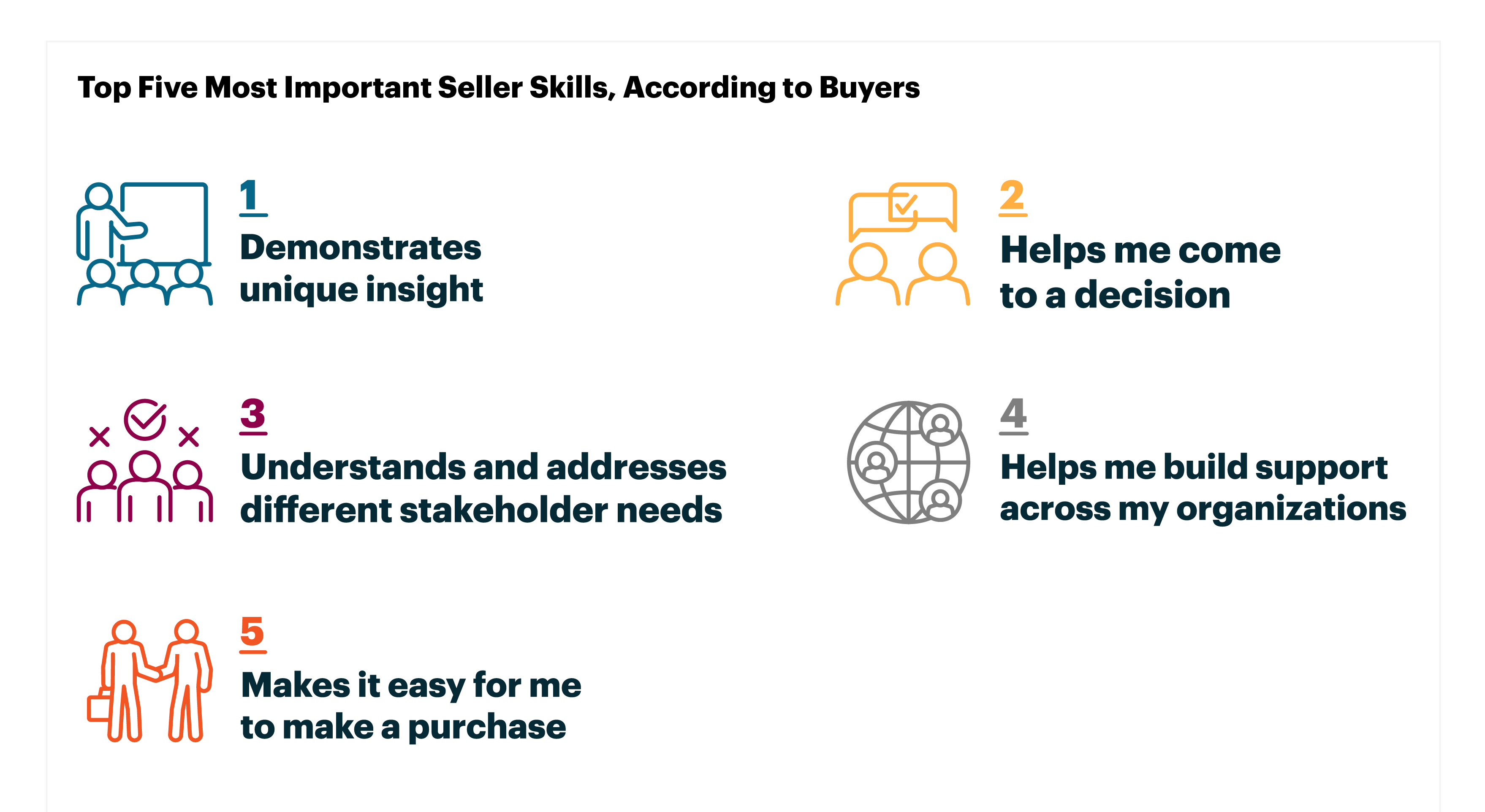
One answer comes from Challenger’s most recent buyer study. When asked what skills they value most in a seller, buyers rank skills that essentially amount to the Challenger skill of taking control of the sale. They want reps to help them address different stakeholder needs, build support across their organization, and clear the way to close. Teaching with a unique insight opens the door by demonstrating an advanced grasp of the client’s industry, problems, and role. In taking control, the seller gives buyers a reason to hold the door open. They demonstrate a grasp of complex sales that many buyers desperately want.
Another reason not to fear reframing thinking for skeptical customers: In “The Challenger Customer,” authors Matt Dixon, Brent Adamson, Pat Spencer, and Nick Toman dug into who the most successful sellers partner with during a sale. They found that targeting one type of buyer—the Mobilizer—resulted in far more sales success. Mobilizers are often skeptical, seasoned, and well-regarded in their fields. Yet Challengers love to work with this profile; they have the acumen to move sales forward in complex organizations.
And those skeptical Mobilizers? Challengers earn their trust by offering Commercial Coaching, where the seller arms a Mobilizer with Insights and guides customers through the purchase process.
How Challengers Wield Control Without Aggression
To be clear, taking control of the sale involves an understanding of complex negotiation. Here, it can be helpful for sellers to consider whether they’re being “aggressive” or “assertive.” The DuPont Negotiations Roadmap, laid out in this post and detailed in The Challenger Sale, offers a helpful guideline for what it looks like to respectfully challenge the client in negotiations without veering into aggressive or pressuring tactics.
- Build an action plan
- Shift the conversation to value
- Refocus on priorities
- Exchange value instead of giving it away
Using Constructive Tension
Constructive tension is among the hardest Challenger skills to nail, and some sellers read a term like “tension” and refuse to try. In fact, 97% of customers tell us they want more support for their teams around this skill. The problem is that, like Challenger itself, many people misunderstand constructive tension’s role in sales.
The best-performing sellers use constructive tension with the other Challenger skills to help customers realize they need to make a change. It isn’t about creating tension between the seller and the buyer. It’s about creating tension within the customer themselves; the tension lies between what they thought before and the information a Challenger rep uniquely presents.
Imagine what happens when a trusted friend asks a hard question, then pauses to let you consider the answer. Maybe they’ve just shared a new perspective, pointed out a truth you hadn’t considered, or repeated back your own words. Constructive tension is what happens when you thoughtfully consider — and the wisest friends know that acceptance arrives in the space they leave for you to do it.
Constructive Tension Is:
- Something productive sellers use to compel action
- Strategic, empathetic, and aimed at exploring conventional ways of thinking, assumptions, and answers
- Used across the sales cycle
Constructive Tension Is Not:
- Aggressive, hostile, or forceful
- Intentionally uncomfortable
- For use during negotiations only
Challenger facilitators often encourage sellers to look at a visual aid like the dial of tension for guidance on this complicated skill. By reading body language, gauging for signs of frustration, and correcting course (naming the tension, refocusing on the goal, summarizing) when necessary, sellers can maintain control without burning bridges.
For more on using constructive tension in markets around the world, check out Veronica Coli’s article “Beyond Borders: Debunking Myths About Challenger for International Markets.”
Does Challenger Make Sellers Too Aggressive?
Buyer opinion of sellers is low, and the old model of relationship selling no longer drives the deal forward. When we retested buyer opinion of seller skills related to providing a powerful sales experience post-COVID, seller capability in the five most important skills to buyers was down 40% since 2019. As buyers navigate new AI research tools and increasingly rebuff mediocre outreach, the ability to not just deliver insight but guide buyers toward the right solution will be essential for successful sales. When Challengers truly grasp concepts like constructive tension, they can confidently and assertively drive the deal forward without risking damage to new and existing relationships. While passive reps cede control of the conversation and allow it to collapse into a pricing war, Challenger sellers stand out. They deliver something different, and in doing so, build relationships as a partner, not another vendor.

More from our blog

How to Build Industry-Specific Insight Narratives for Sales Teams
A successful Challenger selling motion hinges on a well-crafted Commercial Insight. It helps sellers dispute existing assumptions and create urgency…

How to Sell to Buyers Who Have Already Done Their Research
The current crop of B2B buyers is something we’ve never seen before: an AI-empowered, outreach-averse group of highly-informed consumers. Gartner…

How to Align Sales Playbooks with Marketing Messaging
How to Align Sales and Marketing Around a Consistent InsightSales and marketing have never quite solved one conundrum: sales playbooks that…
What are you waiting for?
Transform your sales team.
The best companies grow, and grow fast, by challenging customers, not by serving them.