

How to Align Sales and Marketing Around a Consistent Insight
Sales and marketing have never quite solved one conundrum: sales playbooks that inevitably drift and morph from the message marketing puts into the world. No matter how much leadership course corrects, these two teams seem to run like opposing magnets. Why can’t sellers stick to marketing messaging? Why can’t marketing listen better to their peers in sales?
Solving this problem resolves more than the tension between teams. It carries potential to tighten pipeline, smoothen negotiations, and contribute to a loyalty-building customer experience. As the original Challenger research demonstrated in 2008 and validated again in 2019, sales experience—not product, brand, or even price—drives that loyalty. A strong, consistent commercial insight sits at the core of that experience, and getting it right is the key to unlocking commercial alignment between teams.
Why Insight Is the Key to Commercial Alignment
Both sales and marketing run hard at commercial goals. But without a shared language built on strong communication, both teams can inadvertently stymie each other’s goals. A commercial insight, the foundation of the Challenger choreography, creates a shared cornerstone that Challenger-trained organizations can scaffold their commercial teams, messaging, and sales playbooks around.
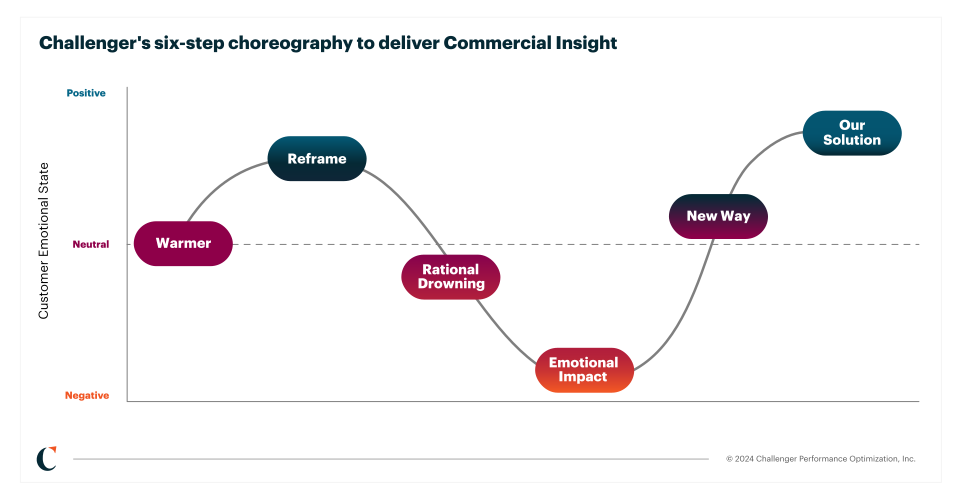
Why does it work so well? A strong commercial insight isn’t just a shared product position or pitch.
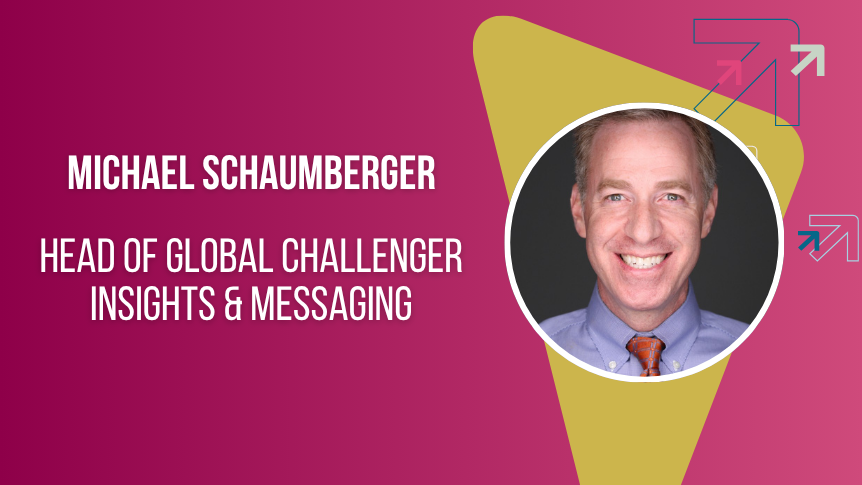
“It captures your customer’s current thinking, exposes the flaws or the misinformation in this thinking, and presents a better course of action that ties to unique capability and strength,” Richardson’s Michael Schaumberger, Head of Global Challenger Insights & Messaging, explains.
The strongest commercial insights are built collaboratively with teams from sales, product, and yes, marketing.
“Marketing needs to be brought in every day,” Schaumberger says. “They need to be thinking about ‘how are we going to change the course of the alignment here?’”
Ideally, a small team of contributors from Product, Sales, and Marketing craft the commercial insight together with help from a Challenger advisor like Schaumberger.
With a strong insight in place, teams can build everything from product messaging to ad copy to sales decks around a single, unified message. But it isn’t enough to stop with one insight.
How Challengers Build Shared Commercial Playbooks
There’s a memorable scene in NBC’s “The Office” where, while out on a sales call, obtuse manager Michael Scott is so committed to his GPS’s capabilities that he drives straight into a pond against his better instincts while screaming “The machine knows!”
Teams following rigid playbooks risk driving their deals off the road, too. Shared commercial playbooks work best for Challenger-empowered teams when they’re treated as a flexible framework rather than a rigid set of steps. The commercial insight is just one—albeit essential—part of the Challenger sale.
Challengers create an exceptional sales experience by Teaching, Tailoring, Taking Control of the Sale and deploying Constructive Tension. Once they’re familiar with the choreography, they can begin confidently tailoring their insights to their customers, deploying constructive tension at the right time, and softening their framing of the valley of despair in a way that moves conversations forward instead of feeling abrasive.
“What we’re building is a conversational guidepost… everyone should be tailoring the conversation to their own style, to their own comfort level,” Schaumberger says. “It’s having the consistency of not creating robots, but the consistency of the process.”
The insight library isn’t meant to be static. It can and should change over time, based on feedback from sales, market signals, product updates, and more. Holding this “playbook” loosely helps teams share the responsibility to flag and complete updates, changes, and new insight iterations.
Marketing’s role:
- Help sellers hone their language and create new insights built for specific verticals
- Monitor competitor trends, market shifts, and changing contexts
- Flag when an insight library should be updated.
Sales’s role:
- Tailor insights for the buyers’ context
- Provide feedback on the Insight’s resonance in sales conversations
- Give marketing the specific language buyers use to validate or push back on the insight
“It’s like a marriage. It’s like a partnership,” Schaumberger says. “Without that communication, you’re just going to fail.”
Of course, while the team benefits from shared playbooks, the organization needs structure to support how they’re rolled out, updated, and improved. That’s where leadership and enablement teams come in.
Read the Article: Aligning Sales & Marketing for a Stronger Sales Narrative
Creating the Framework That Supports a Shared Language
Without follow-up and reinforcement, teams forget 90% of new information within a week. That’s why creating a shared language and building commercial playbooks that work well for sales and marketing requires consistent buy-in, communication, and reinforcement in the field.
Tools that drive sustained reinforcement, such as AI role-play tailored to specific verticals, can certainly help, but the largest source of enablement sits at the top of the org chart. Sales leaders must consistently point back to the commercial insight as a guidepost while reinforcing Challenger skills and analyzing deal progression. Marketing leaders must encourage two-way communication between teams so both know what’s resonating, what’s receiving pushback, and what’s sitting unaddressed. Sales enablement can foster communication on both sides by encouraging teams to consider other perspectives.
Finally, it falls to executive leaders to model and support the consistent reinforcement required for real change. Learning a new language—or in this case, co-creating one together—takes time and real-world practice.

More from our blog
How to Build Industry-Specific Insight Narratives for Sales Teams
A successful Challenger selling motion hinges on a well-crafted Commercial Insight. It helps sellers dispute existing assumptions and create urgency…

How to Sell to Buyers Who Have Already Done Their Research
The current crop of B2B buyers is something we’ve never seen before: an AI-empowered, outreach-averse group of highly-informed consumers. Gartner…

Is Challenger Selling Too Aggressive for Relationship-Driven Buyers?
Whether you’re considering a Challenger rollout for the first time or hoping to bring it to your organization, you’ve likely encountered a common…
What are you waiting for?
Transform your sales team.
The best companies grow, and grow fast, by challenging customers, not by serving them.